VRS Black FridaySee all deals →
VRS Logo
VRS Logo
DirectForce Pro G2 Pedals
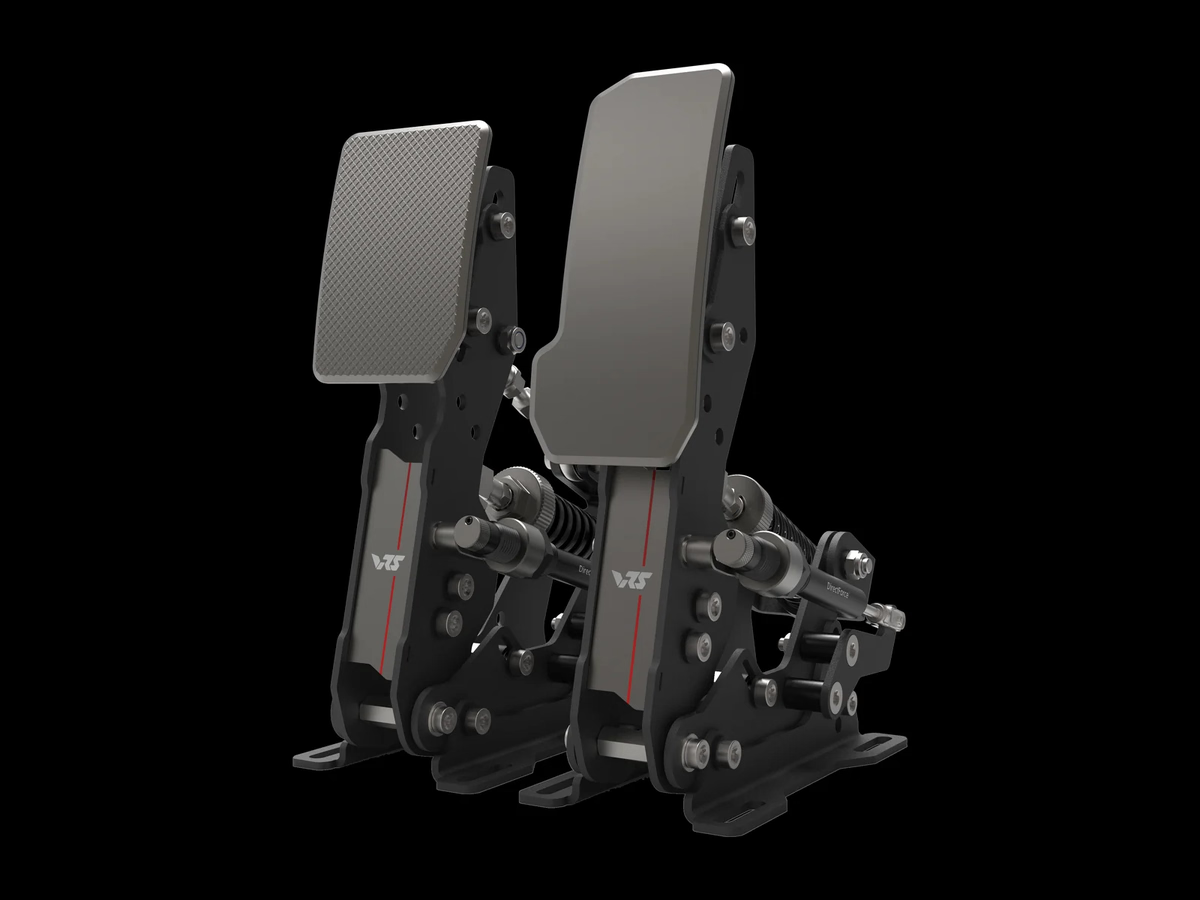
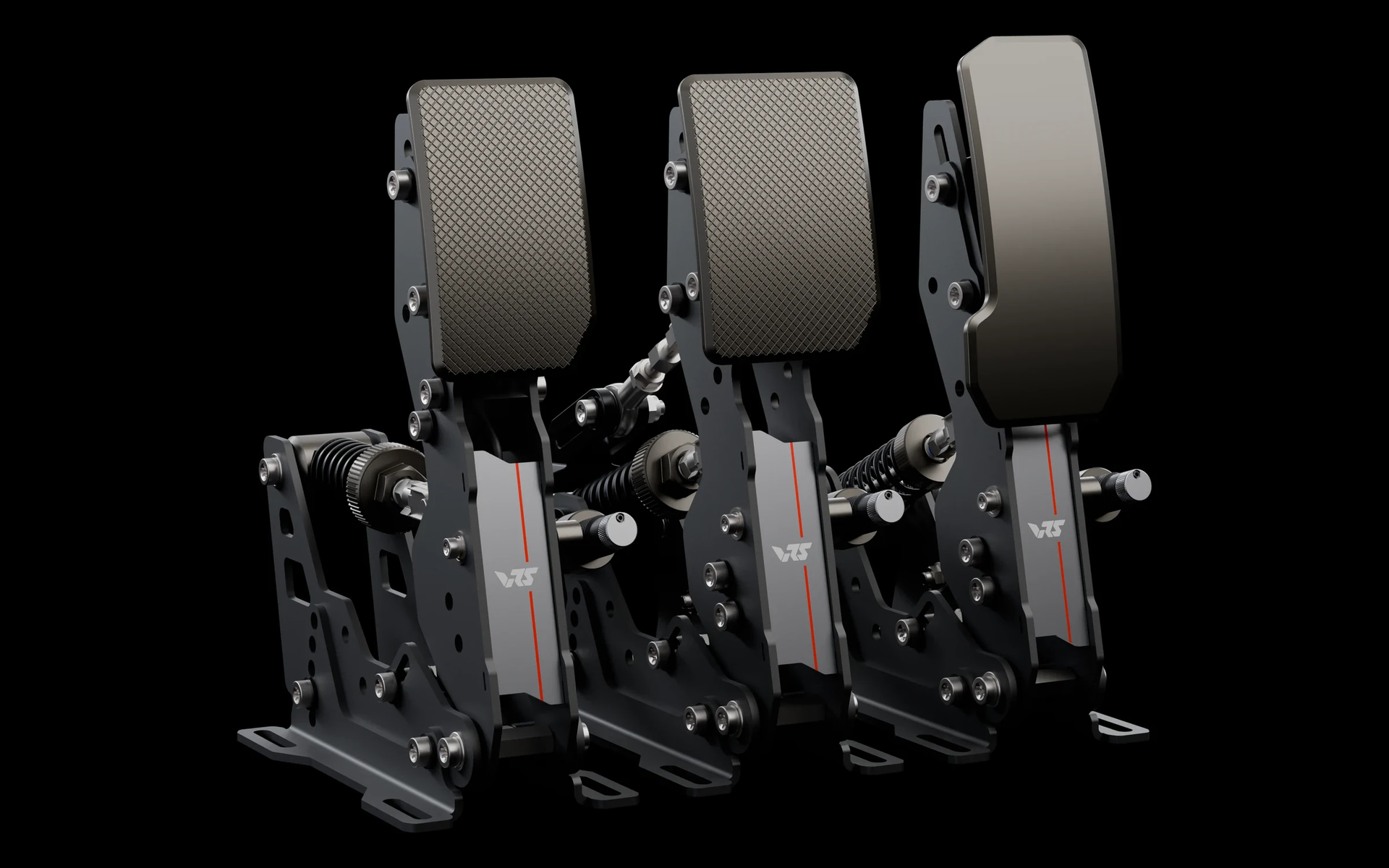
VRS DirectForce Pro G2 Elite clutch, brake and throttle pedals
VRS DirectForce Pro G2 Pedals

Pure mechanical precision.

Measure the driver. Not the pedal. A brake that firms up like a race car's. A zero-friction throttle that moves the instant you do. A clutch that lets go like the real thing. Every pedal has its own load cell and steel springs that feel the same on lap 100 as on lap 1. Preload is set by hand, and everything adjusts with the pedals on your rig.

BuyThrottle & Brake and Clutch, in Sport and Elite editions
Brake load cell
200 kg
Clutch load cell
80 kg
Throttle load cell
10 kg
Pedal controller
24-bit
Why G2

Six reasons to choose G2

  1. 01

    Progressive brake feel, with no hydraulics to maintain

    A tie rod and bell crank make the force rise faster the further you press. No oil, no seals, nothing to bleed.

  2. 02

    Steel springs that feel the same hot or cold

    Steel returns the same force at the same travel, cold or warm, pressing or releasing.

  3. 03

    A load cell on every pedal

    200 kg brake, 80 kg clutch, 10 kg throttle. The sensor is part of the structure and carries the load directly.

  4. 04

    A zero-friction throttle

    The spring is pressed in a straight line and its bracket turns on a ball bearing, so the pedal moves at the first touch.

  5. 05

    A clutch that feels like a real one

    The force rises, then falls away at the end of the stroke, as it does with a diaphragm spring.

  6. 06

    Every adjustment is made on the rig

    Tool-free preload on all three pedals, an adjustable brake curve, and measured force graphs for each setting.

Sport and Elite: two options to choose from

Both editions share the frame, the sensors, the springs and the bearings, so they measure and feel the same at the core. Elite adds machined pedal faces and a damper on every pedal. A Sport set can take both later, without leaving the rig.

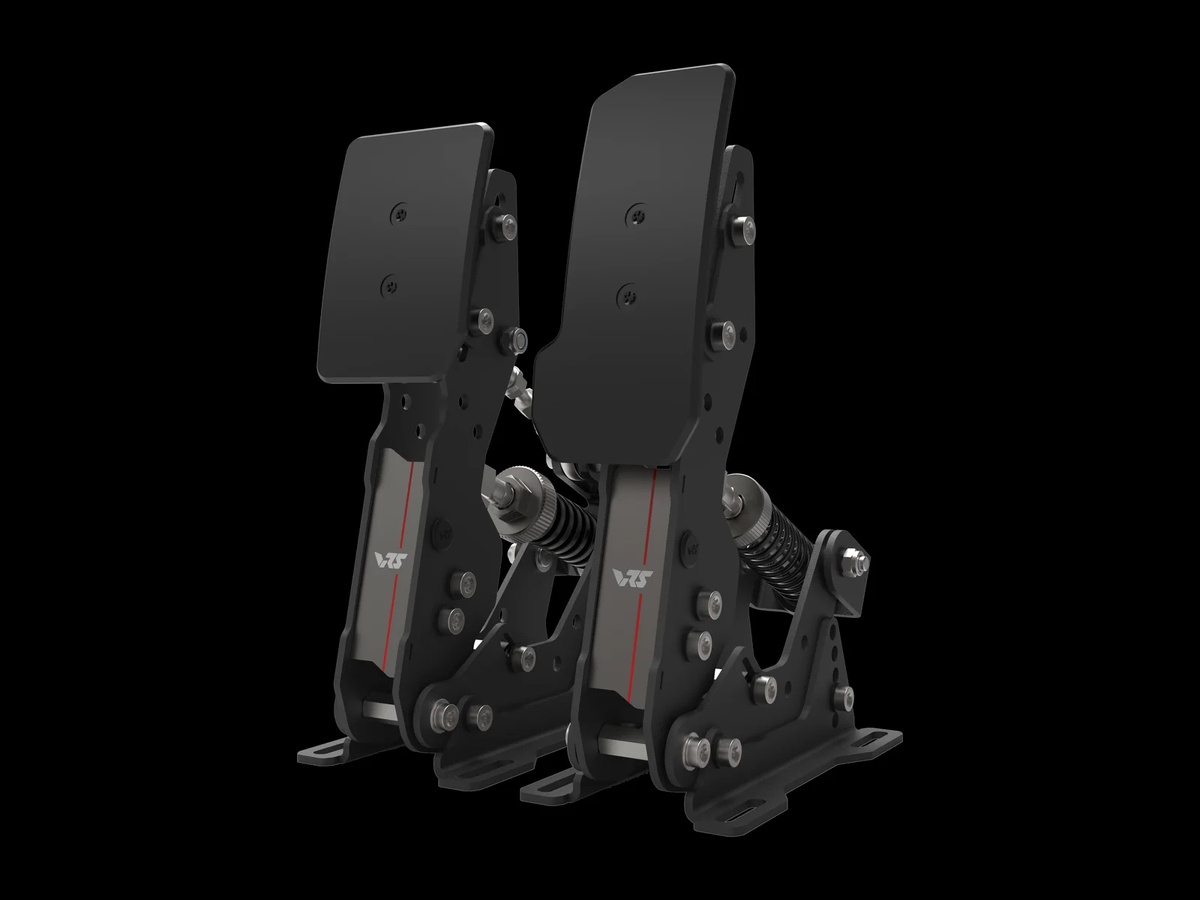
DirectForce Pro G2 Sport throttle and brake pedals

Sport

Every G2 upgrade, in deep black.

  • Tool-free preload, one-piece brake crank and a smoother throttle
  • Aluminium pedal faces with CNC-machined edges, sandblasted and black anodised
  • Damper available, fits on the side while the pedal stays on your rig (optional)
  • Matching Sport clutch
DirectForce Pro G2 Elite throttle and brake pedals with premium faces and dampers

Elite

The same G2 pedal, finished with premium faces and dampers fitted.

  • Tool-free preload, one-piece brake crank and a smoother throttle
  • Pedal faces CNC-machined from solid 6061 aluminium, carbon grey anodised, with diamond grip on brake and clutch and no screws on the front
  • Dampers pre-installed
  • Matching Elite clutch
Brake

A brake that feels the same on every lap

A 200 kg load cell, a progressive mechanical linkage and steel springs. The pedal firms up the harder you press, and it asks for the same pressure at the same point, corner after corner.

200 kgLoad cell
Brake tie rod and bell crank from above, DirectForce Pro G2

Progressive brake feel without hydraulics

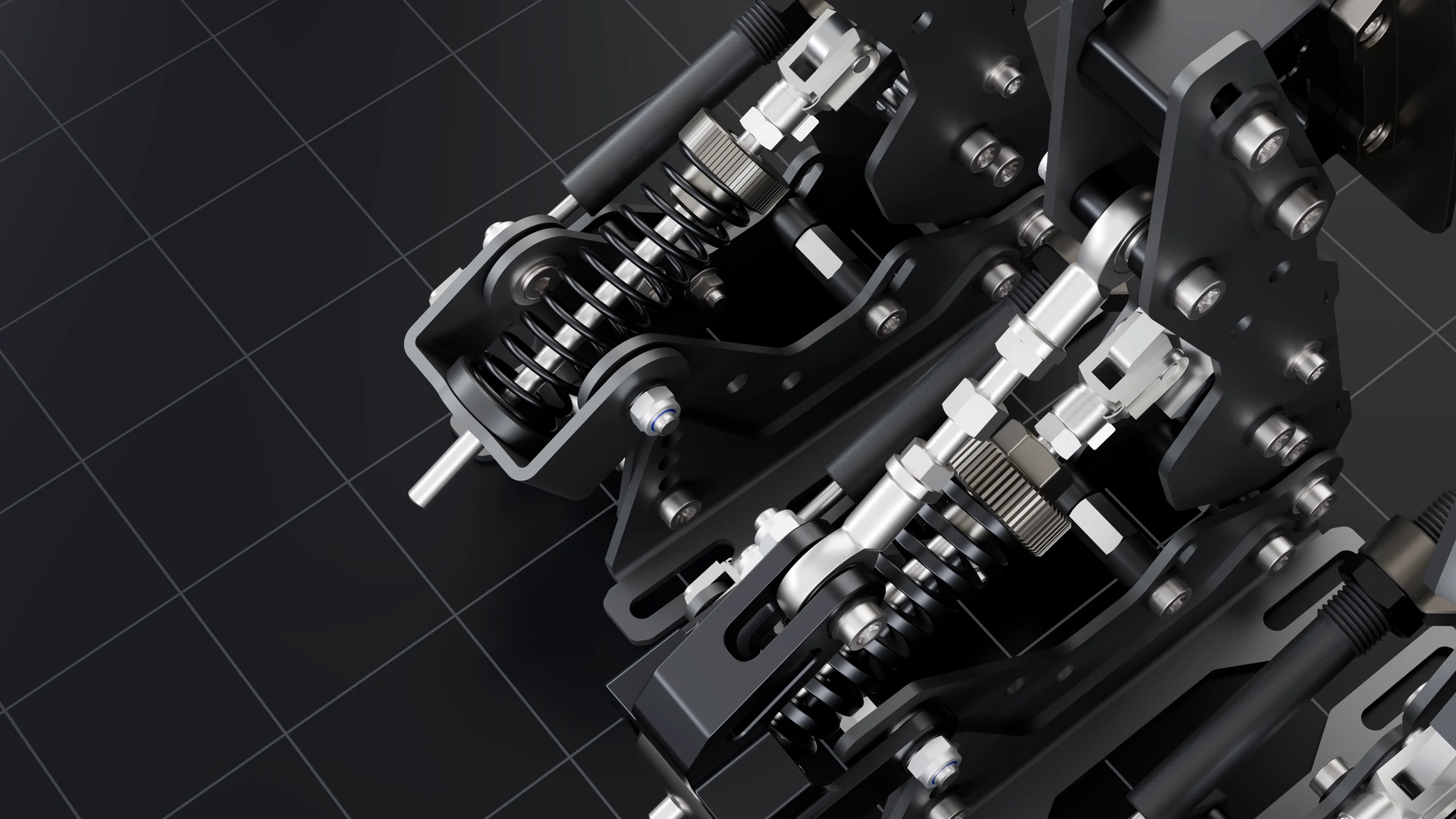
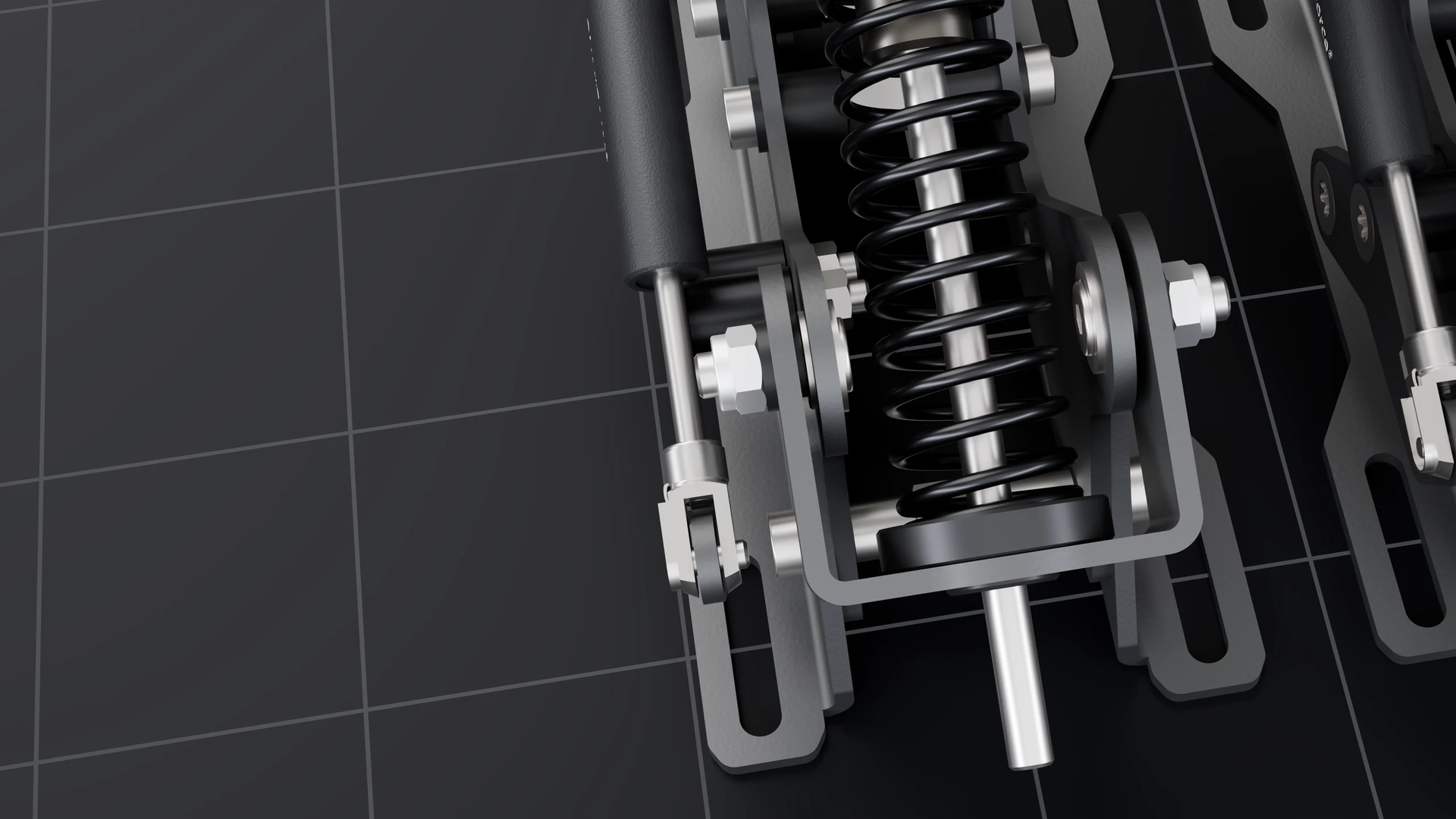
A tie rod and bell crank drive the brake spring. As the pedal travels, the angle of the bell crank changes and the force climbs faster and faster, so the pedal firms up under your foot the way a race car brake does. You modulate against rising resistance, which is what makes a threshold findable.

It is done with mechanical parts alone. There is no fluid to leak and no seal to wear, and the same linkage has years of use behind it on many thousands of pedals.

Tie rod and bell crank linkage · progressive force curve · no oil, no seals

Brake spring, tie rod and crank, DirectForce Pro G2

Steel springs: the same force, hot or cold

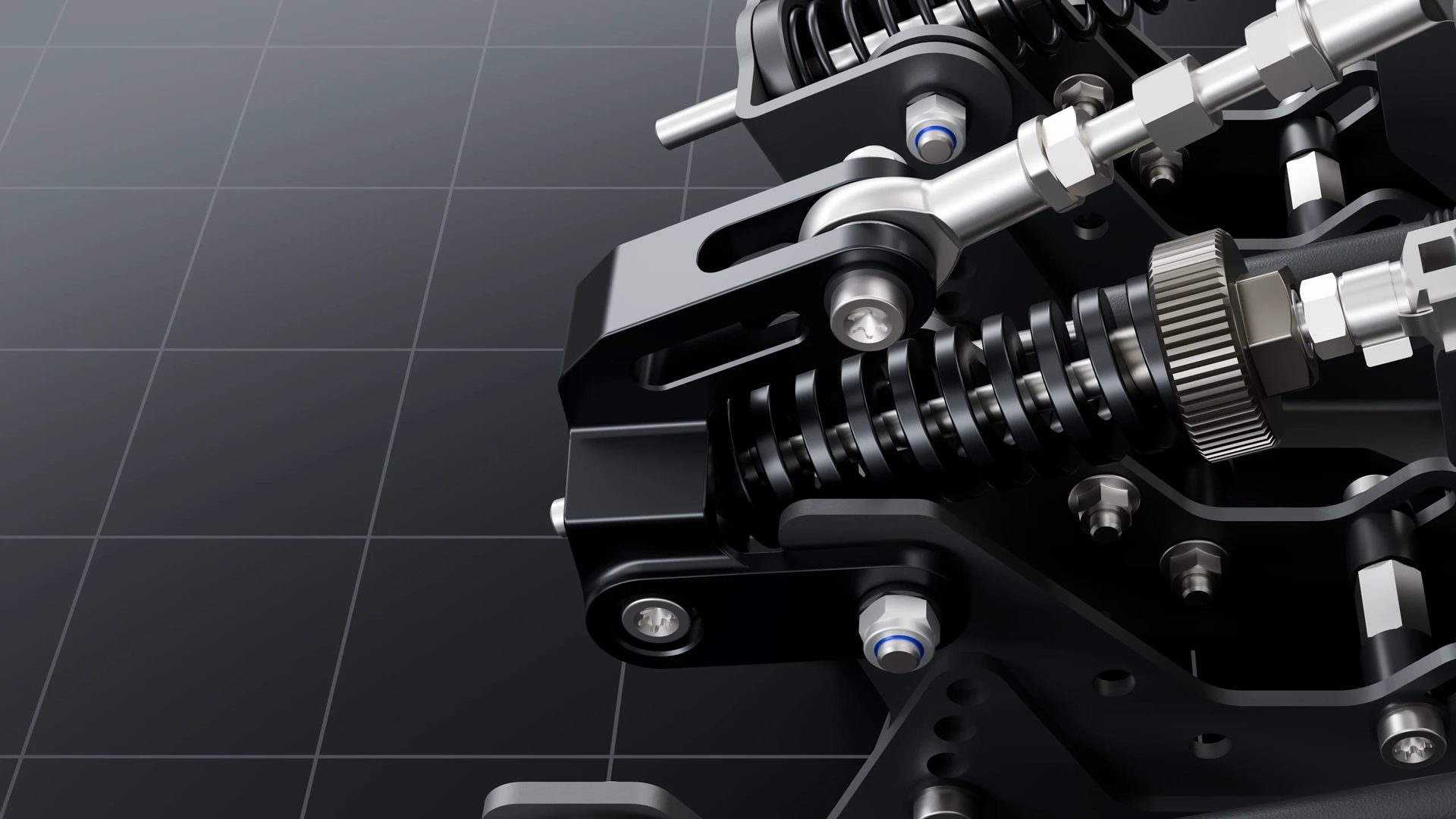
As on our original DirectForce Pro pedals, we continue to choose steel springs over elastomers. Elastomers push back differently on release than on press, and they soften as they warm through a stint. A steel spring gives the same force at the same travel every time.

The pressure that held the car at the limit in the first ten minutes is the pressure that holds it in the last ten. Two springs are in the box, and the red one roughly doubles the force of the blue.

Steel compression springs · blue fitted, red included · red roughly doubles the force at the same travel

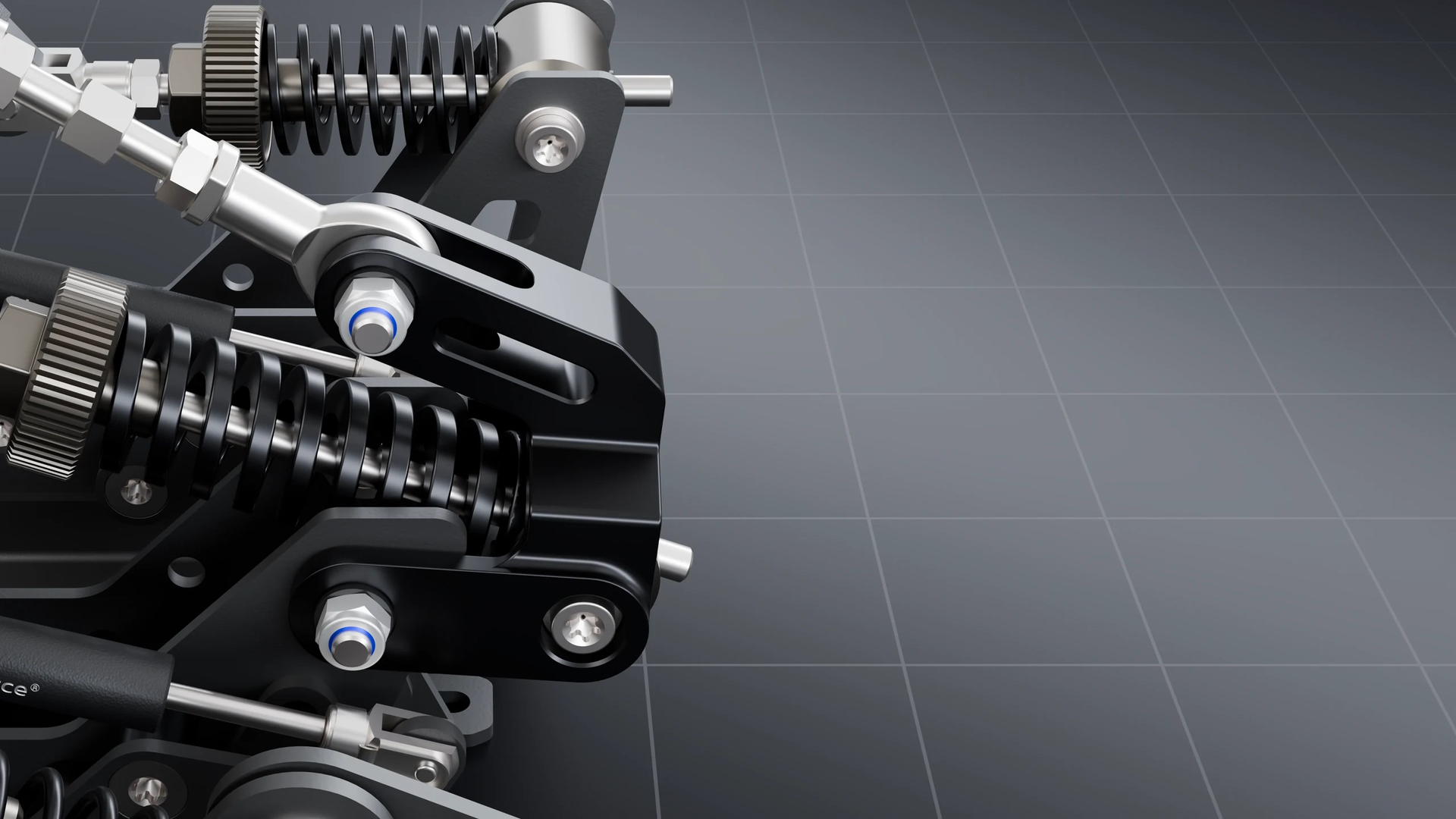
One-piece CNC-machined brake crank with the tie rod end, DirectForce Pro G2

Brake crank machined from one solid piece

The crank is machined from a single block of aluminium, with every pivot hole cut into the same part. The linkage is aligned by the machining itself, and there are no plates or spacers to shift under a hard stop.

Bearings in the pivots keep it moving freely. The brake point stays where you learned it.

Crank CNC-machined from solid 6061 aluminium · all pivot holes in one part · bearings in the pivots

Tool-free CNC preload knob on the brake spring, DirectForce Pro G2

Adjust the brake curve, with measured graphs for every setting

The tie rod length sets the starting angle of the bell crank, and with it how progressive the brake is: longer travel with a soft first touch, or short and firm. The bell crank changes the leverage on the spring, and the preload knob sets the starting force.

We measured the force curve for each setting and publish the graphs. You choose a brake from data, then confirm it on track.

Adjustable tie rod · adjustable bell crank · tool-free preload · measured force curves in the data sheet

Inside the brake

Six parts, and what each one does for you

The brake taken apart, part by part.

  1. One-piece bell crank

    Makes the brake firm up the harder you press, like a real car. Machined from one solid piece, so nothing shifts or flexes.

  2. Adjustable tie rod

    Sets how progressive the brake feels. Shorter gives more travel and a softer start. Longer gives a shorter, firmer pedal.

  3. Steel spring

    Same force hot or cold, lap 1 or lap 100. Blue is fitted. Red is in the box and roughly doubles the force.

  4. Tool-free preload knob

    Set the starting force by hand, with the pedals on your rig.

  5. Polished stainless shaft

    Polished to take friction down even further, so every press feels silky smooth. It also keeps the spring perfectly straight: nothing rubs, nothing wears.

  6. Pivot on ball bearings

    The spring seat turns on ball bearings, so the pedal moves smoothly every time.

Measured brake force curves

See what each setting does before you change it

Force at the pedal face against pedal travel, from the G2 data sheet.

Blue or red spring

At minimum preload. The red spring roughly doubles the force at the same travel.

  • Blue spring
  • Red spring
0501001500102030405060Pedal travel (mm)Force at the pedal face (kg)Blue springRed springRed springBlue spring

Preload, blue spring

More preload raises the force through the whole stroke.

  • 0 mm
  • 2 mm
  • 4 mm
  • 6 mm
0204060800102030405060Pedal travel (mm)Force at the pedal face (kg)0 mm2 mm4 mm6 mm

Tie rod length, blue spring

A shorter tie rod gives more travel and a softer start. A longer one gives a shorter, firmer pedal.

  • 95.5 mm
  • 101.5 mm
  • 107.5 mm
  • 113.5 mm
0204060800102030405060Pedal travel (mm)Force at the pedal face (kg)95.5 mm101.5 mm107.5 mm113.5 mm
Throttle

A zero-friction throttle

10 kgLoad cell
Throttle spring on its centre shaft, DirectForce Pro G2

Zero friction, from the first touch

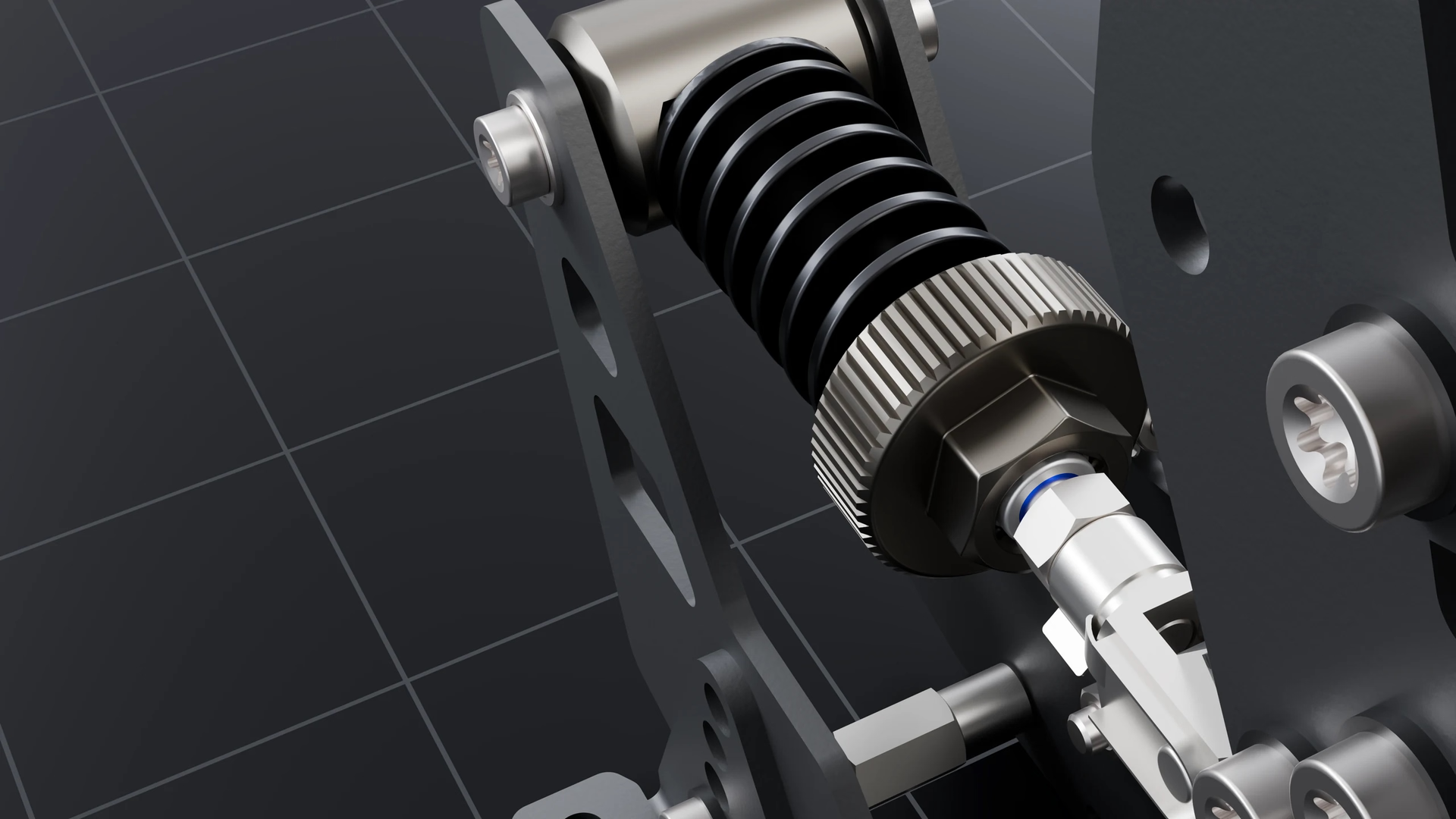
Press the throttle a hair and it moves. Lift a hair and it follows. There is no sticky spot to push through first, so the small inputs that keep the rear tyres gripping on corner exit are easy to make and easy to repeat, lap after lap.

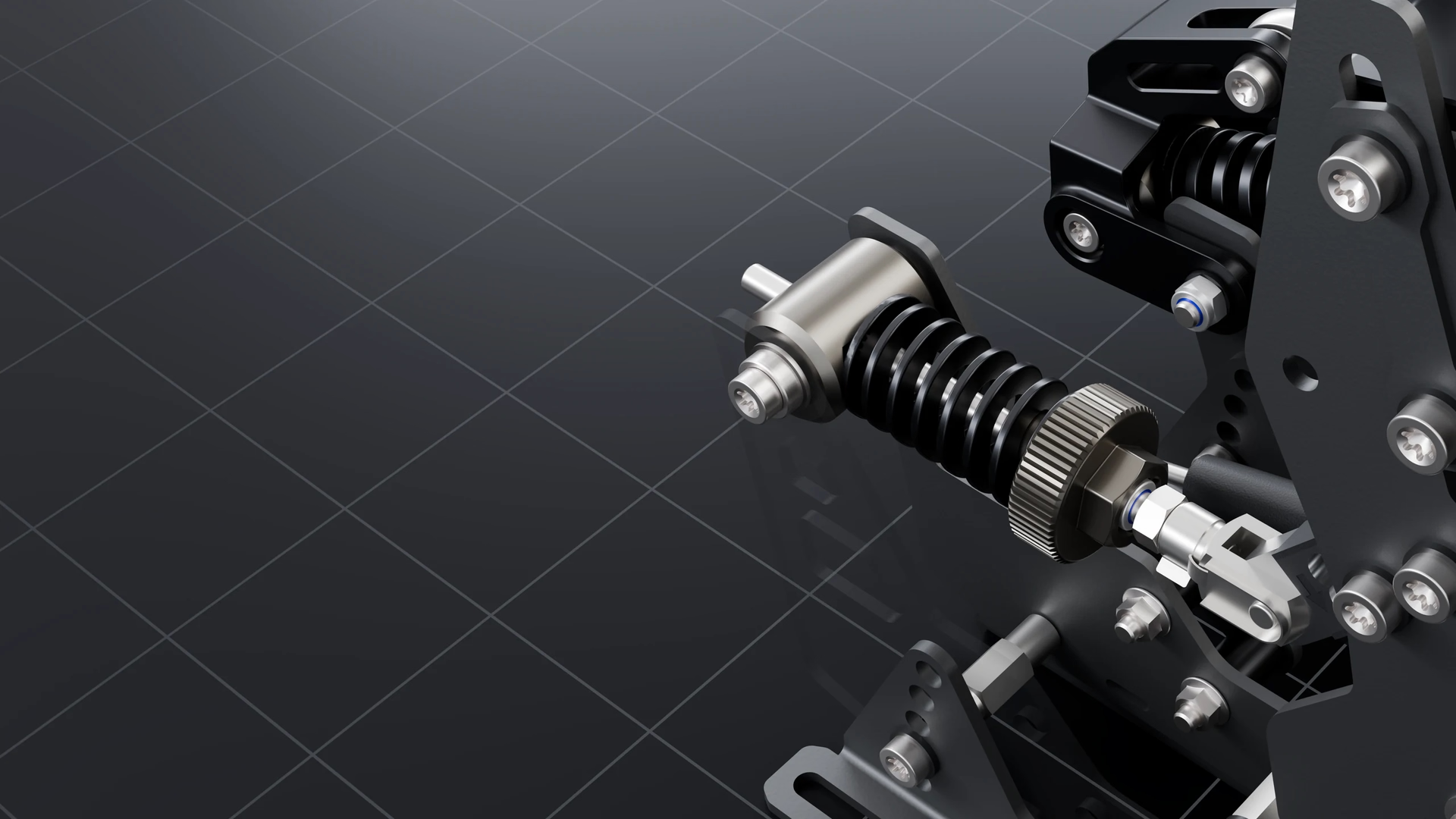
Here is why. The throttle spring is engineered by VRS and custom-manufactured for VRS. It sits on a polished steel shaft that always stays straight, so the spring is squeezed along its length and never bends or rubs against anything. Nothing drags, so nothing wears.

The throttle also has its own 10 kg load cell, which measures how hard you press with nothing in between that can flex. What your foot does is what the car gets.

Polished 304 stainless centre shaft · 10 kg load cell in the pedal arm · tool-free preload knob

Ball-bearing swing bracket holding the throttle spring, DirectForce Pro G2

It rolls where other pedals slide

Most throttle springs pivot on a plain pin, and a pin has to slide. Sliding parts stick for a moment before they move, and you feel that as a notch at the start of the pedal.

On G2 the back of the spring sits in a swing bracket that turns on a ball bearing. As the pedal moves, the spring and its shaft pivot with it, so the spring is always pressed in a straight line and never bends or binds, even with a lot of preload. The shaft is polished 304 stainless steel and runs through a low-friction POM bearing.

So there is no notch at the start of the travel, the pedal pushes back with the same force when you lift, and feeding in a few percent of throttle is a simple movement of your foot.

Ball-bearing swing bracket · polished 304 stainless shaft in a POM bearing

Throttle preload

Force at the pedal face against pedal angle at four preload settings. The preload knob takes the throttle from light to firm by hand.

  • 0 mm
  • 4 mm
  • 8 mm
  • 12 mm
02468100510152025Pedal angle (°)Force at the pedal face (kg)0 mm4 mm8 mm12 mm
Clutch

A clutch that feels like a real car's

80 kgLoad cell
Clutch spring, preload knob and clevis, DirectForce Pro G2

Force that drops at the end of the stroke, like a real clutch

A real clutch gets heavier, then lets go near the end of the stroke, because of the diaphragm spring inside it. The G2 clutch reproduces that with geometry: the spring turns on its pivot as the pedal moves, and its lever on the arm shortens towards the end.

Your foot feels the force fall away at the same place every time, which gives you a reference for standing starts and downshifts. The rear pivot is held on both sides and runs on ball bearings, so the movement is rigid and smooth together.

Geometry modelled on a diaphragm-spring clutch · rear pivot held between both side plates on ball bearings

Damper · factory-fitted (Elite only), optional kit on Sport

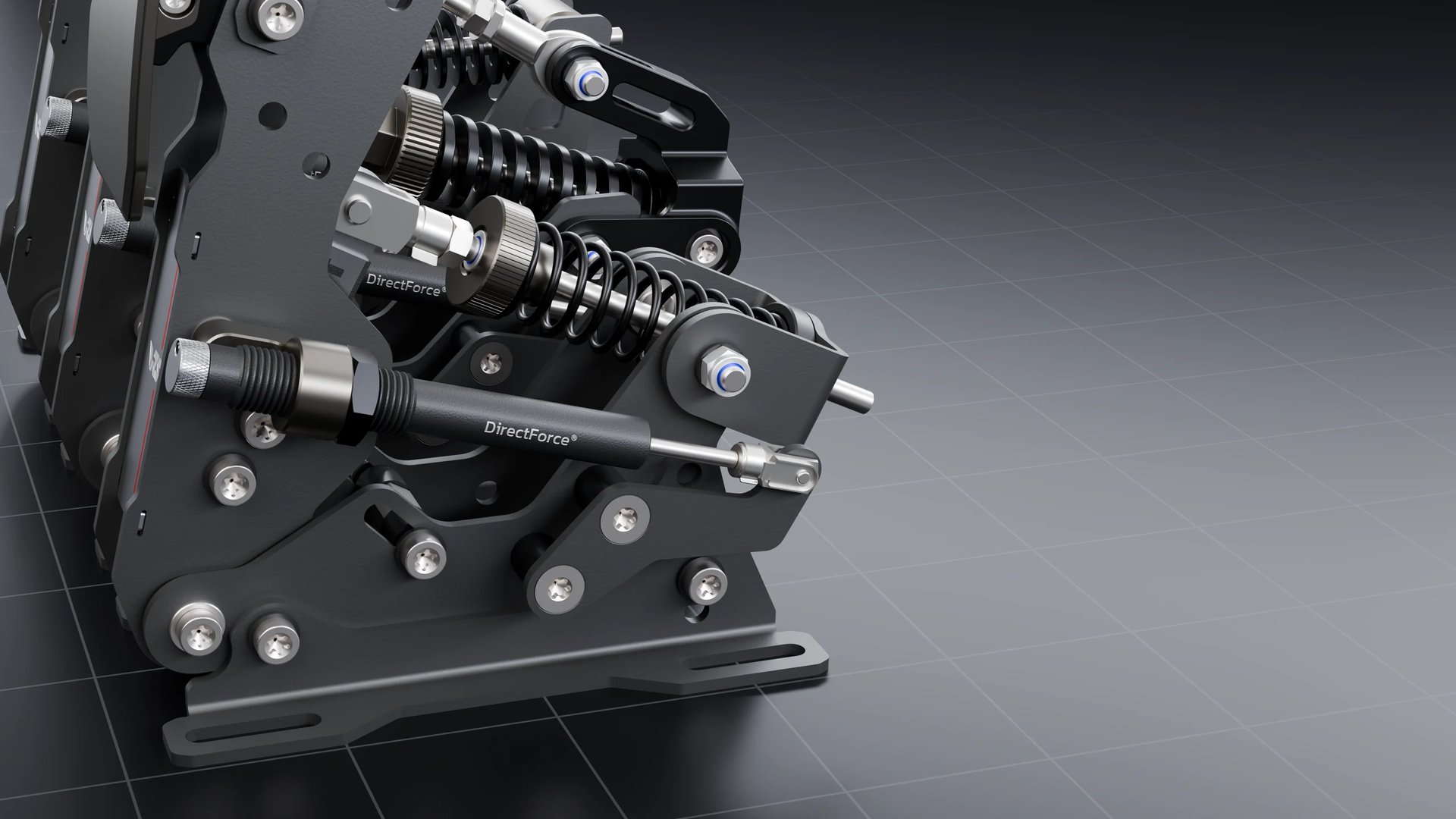
A hydraulic damper for a steadier pedal

Side-mounted hydraulic damper on the DirectForce Pro G2 throttle

More resistance the faster you press

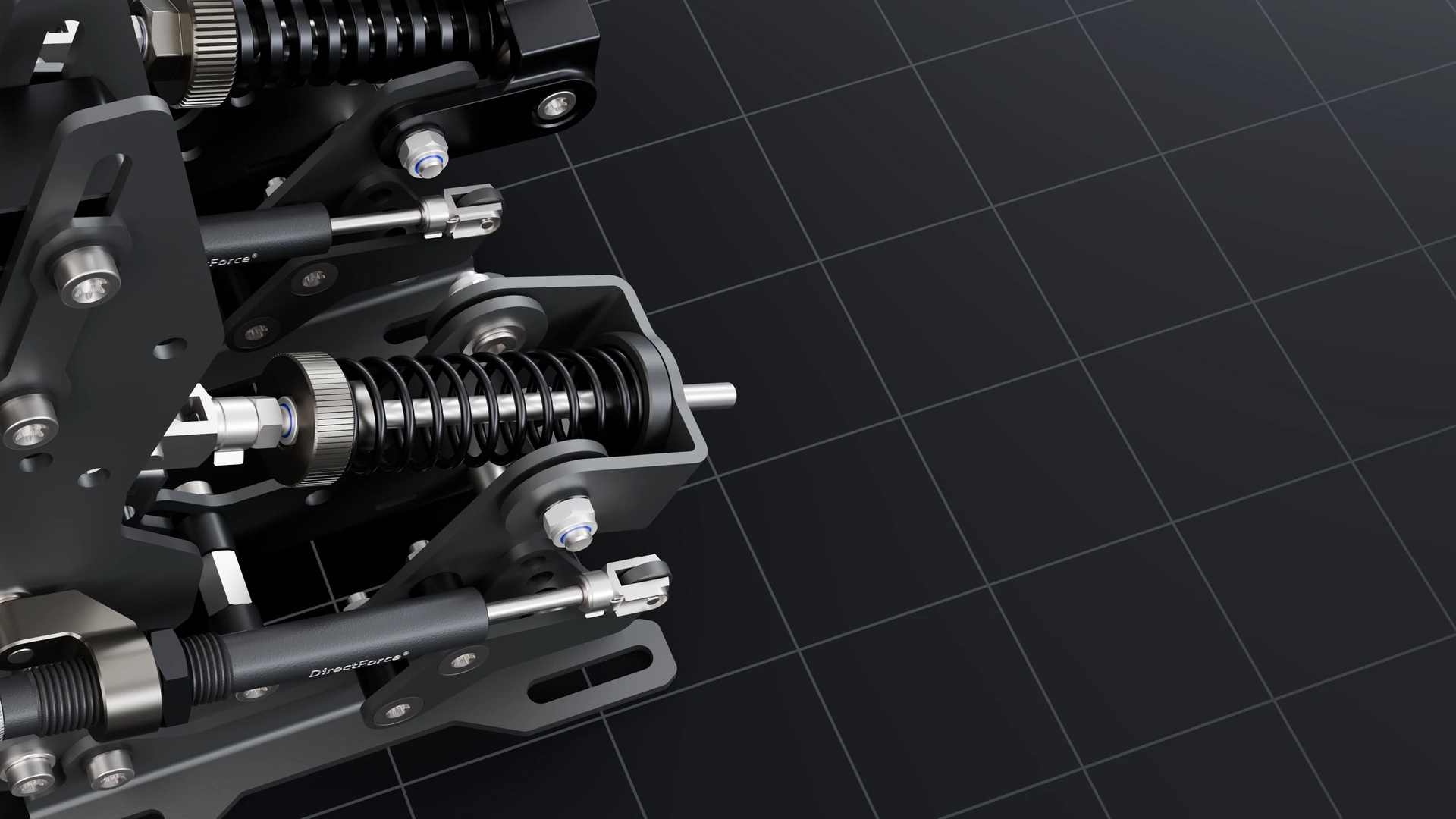
A spring pushes back harder the further you press. A hydraulic damper pushes back harder the faster you press. Press the pedal quickly and the damper resists strongly. Press it slowly and you barely feel it.

That gives the pedal a steadier, weightier movement on the way in and on the way out. When you trail brake, releasing pressure becomes a controlled motion instead of a spring pushing your foot back, and you do not need a harder spring to get there.

Side-mounted hydraulic damper · adds resistance that depends on pedal speed

Adjustable damping that locks in place

The damper is adjustable. Turn its cap to set the damping strength: up for a heavier, calmer pedal that soaks up a stab of the foot, down for a lighter pedal that follows fast inputs freely. The spring, the preload and the force curve stay as you set them.

A locking screw then fixes the setting. A stray foot or a brush against the damper cannot move it, so the pedal you tuned is the pedal you get in every session.

Adjustable damping strength · locking screw holds the setting · Allen key included in the kit

Side-mounted on bearings, with no added friction

The damper mounts on the side of the pedal and connects to bearings that are built into every G2 arm at the factory. The spring, the linkage and the load cell stay exactly as they were.

Because it runs on bearings, it adds damping and not friction. The pedal still moves at the first touch.

Runs on bearings pre-installed in every arm · pedal width 92.5 mm with damper, 87 mm without

Fits the throttle, brake or clutch

The same damper fits the throttle, the brake or the clutch. Elite pedals leave the factory with one on every pedal. On Sport, each arm is already prepared, so a kit bolts on with the pedal still on the rig.

Start with the brake, add the throttle later, or leave the pedals pure spring.

Factory-fitted (Elite only): 2 dampers on Throttle & Brake, 1 on Clutch · G2 Damper Upgrade Kit for Sport

Engineering details

Rigid build, tool-free adjustment, clean signal

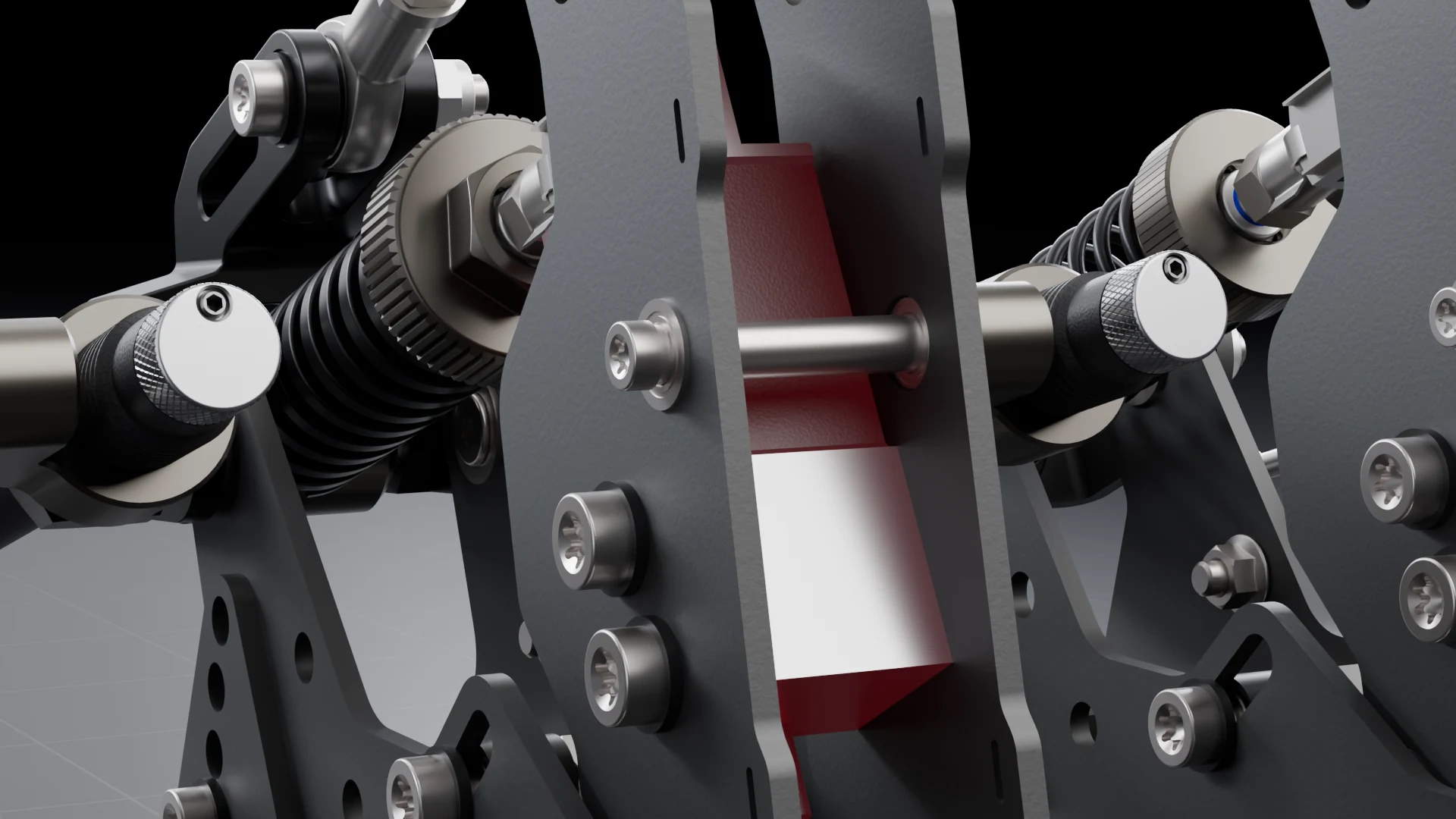
Brake load cell, highlighted in red, between the pedal arm plates

The load cell is part of the frame

On every G2 pedal the load cell is a load-bearing part. On the brake it carries the pedal arm, and the spring pivot is machined into the load cell body. Fewer parts between foot and sensor means less to flex and nothing to drift out of line.

Load cells: 200 kg brake · 80 kg clutch · 10 kg throttle

Tool-free CNC preload knob on the brake spring, DirectForce Pro G2

Tool-free preload on every pedal

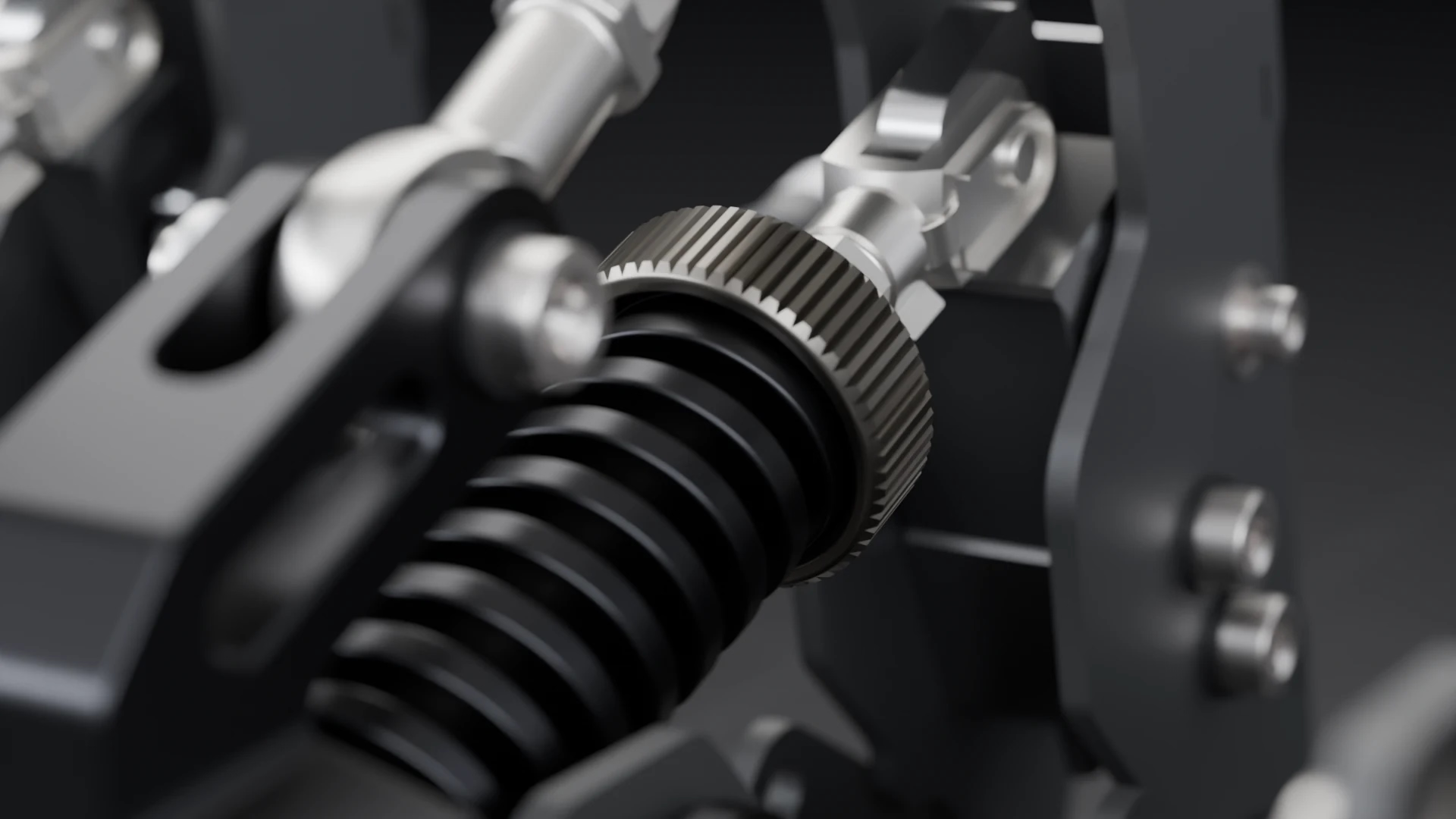
Spring preload on all three pedals is set by a machined aluminium knob, by hand, with the pedals bolted down. Try a setting, drive it, and go back if the old one was better.

CNC aluminium preload knobs, carbon grey anodised · no tools

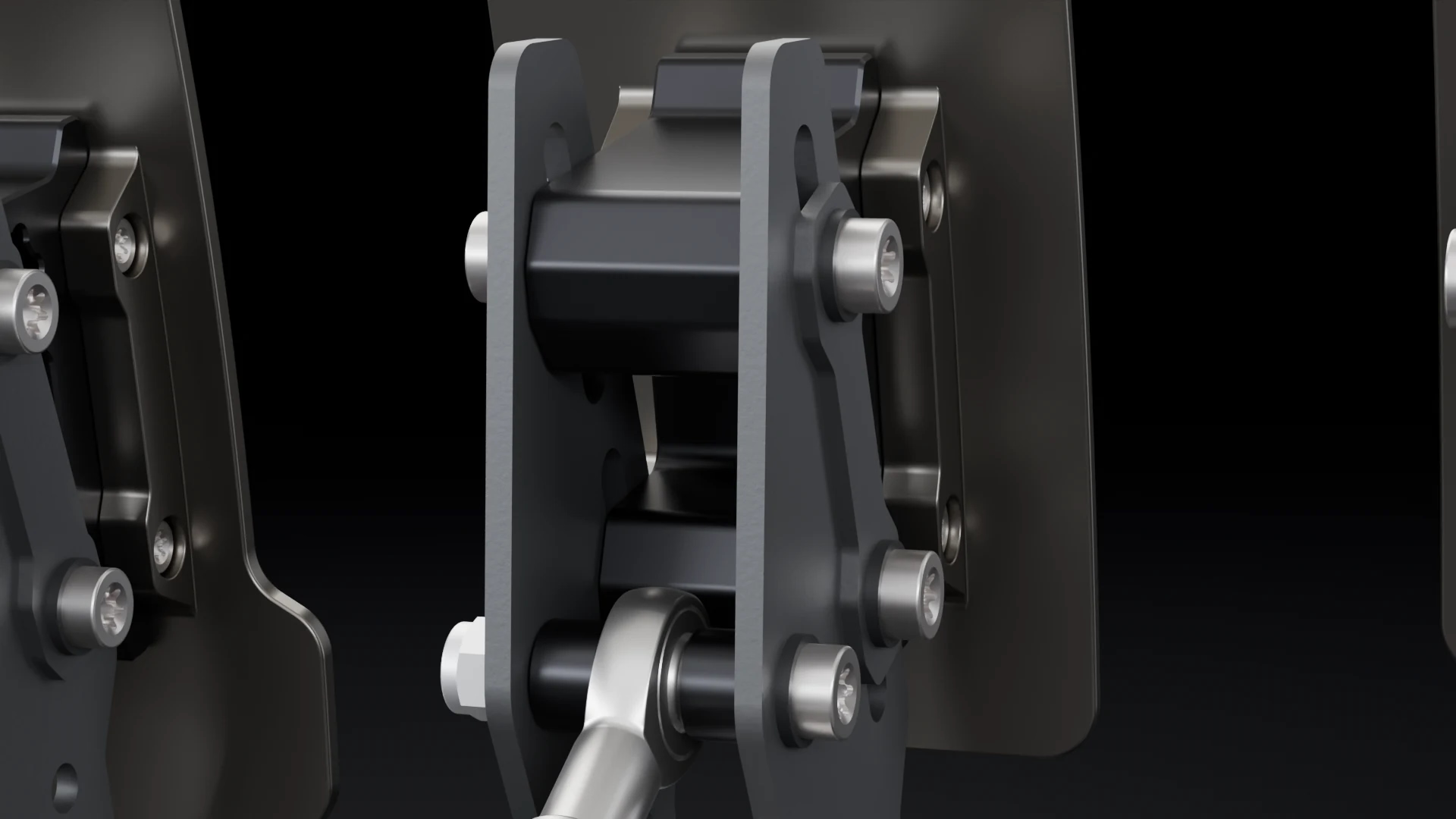
CNC-machined pedal face support with its screws, DirectForce Pro G2

Pedal faces adjust for height and tilt

The pedal face sits on a two-screw mount, so it adjusts two ways. Slide it along the 27 mm slots to set its height, and set its tilt so the face meets the sole of your foot flat.

Two-screw face mount · 27 mm height range · adjustable face tilt

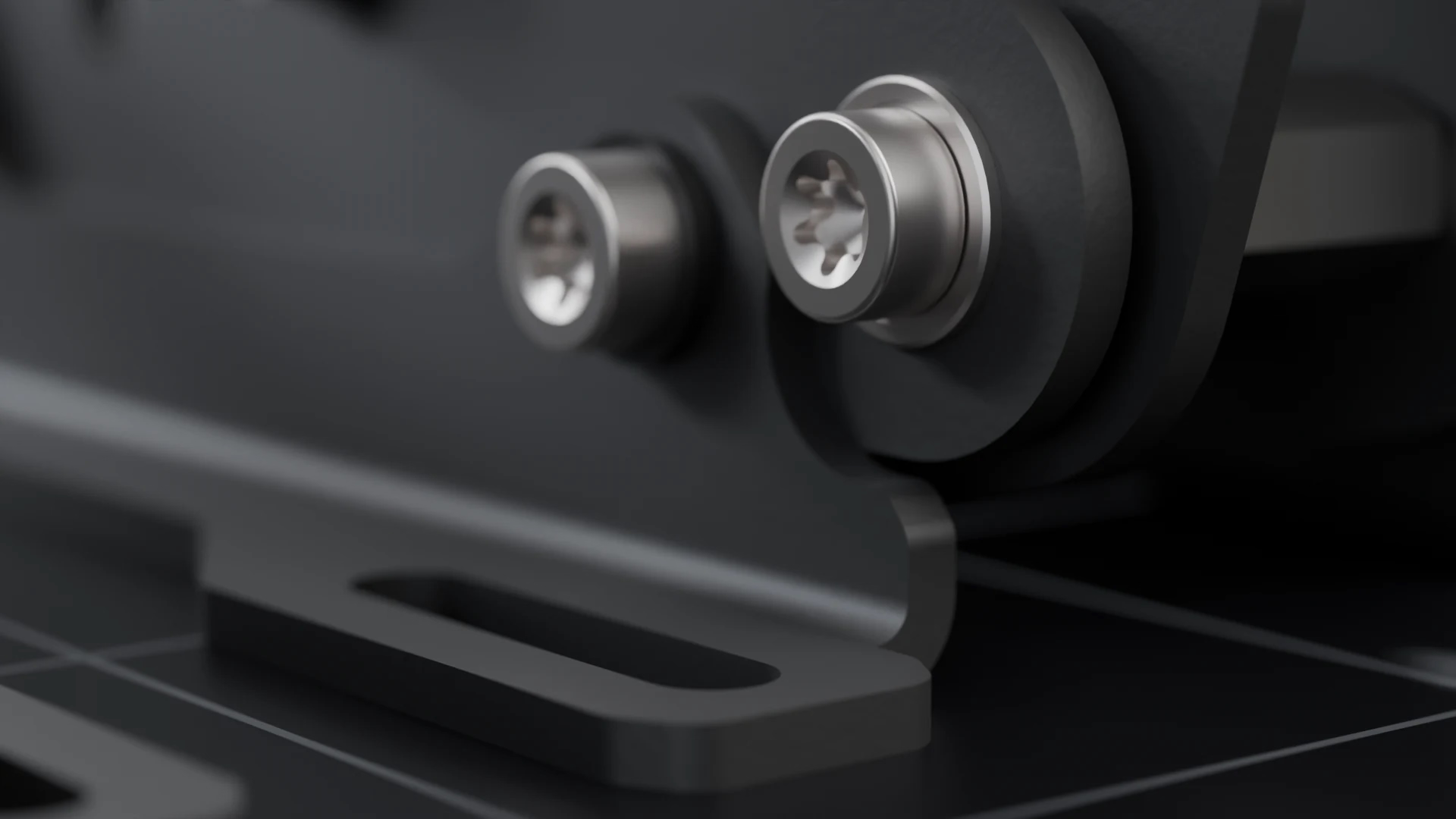
Edge of the 3 mm steel foot bracket with its mounting slot, DirectForce Pro G2

3 mm steel plate, built not to flex

A 3 mm steel frame on thick steel feet holds the pedal still under your hardest stop, so the effort goes into the sensor and not into the mount. Pedal tilt locks into fixed holes: left and right always match, and the angle cannot slip.

3 mm laser-cut steel · 5 fixed tilt positions, about 20° · dual end stops, 70 and 90 Shore

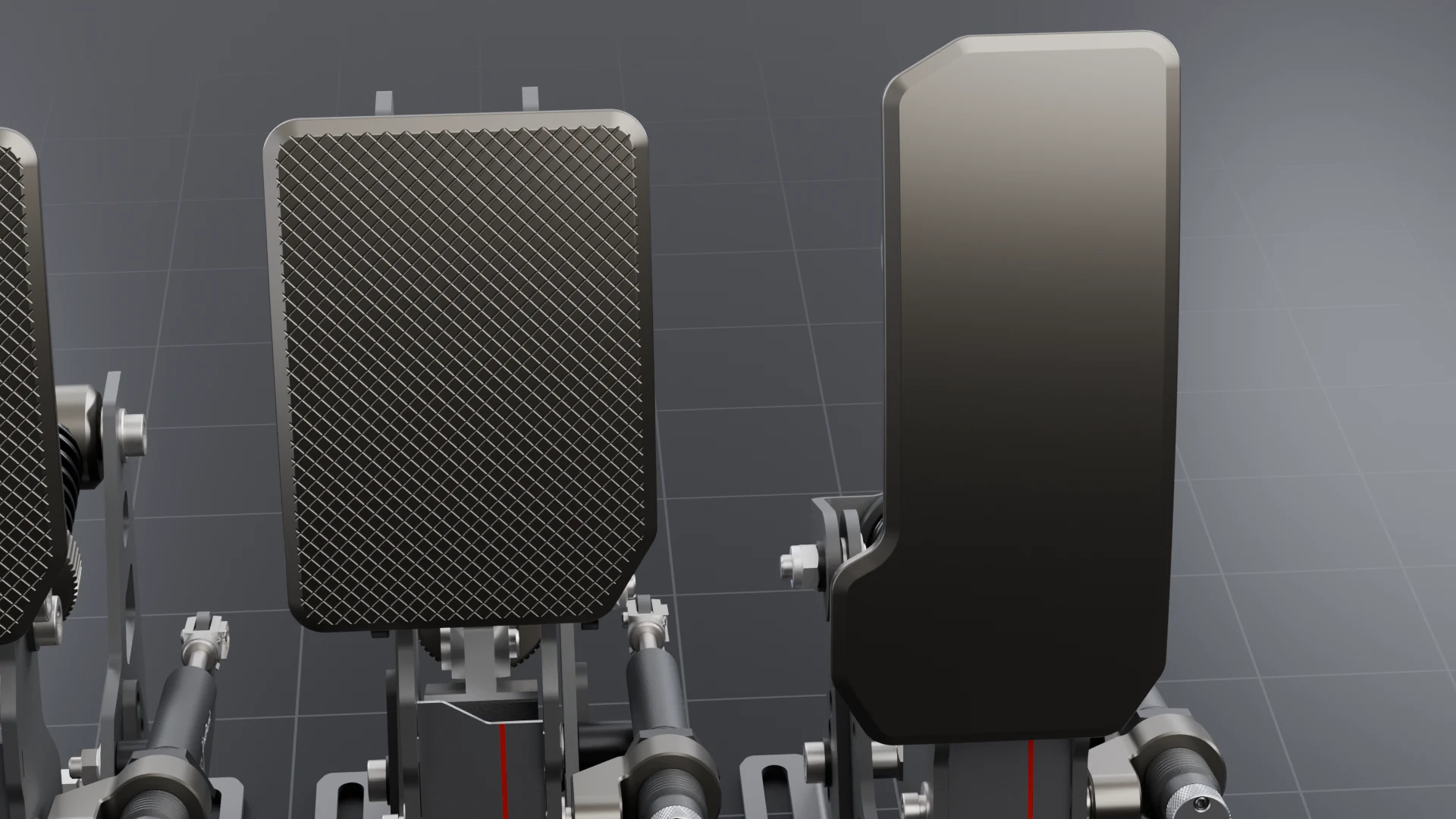
Elite pedal faces: machined diamond grip on the brake, smooth throttle

CNC-machined aluminium faces on both editions

Sport faces are 2 mm aluminium with CNC-machined edges, sandblasted and black anodised. Elite faces are machined from solid 6061 and fixed from the sides, so the front is clean, with a machined diamond grip on the brake and clutch that holds your foot when you press hard.

Both curved to R400 · Sport: black anodised · Elite: solid 6061, carbon grey, diamond grip

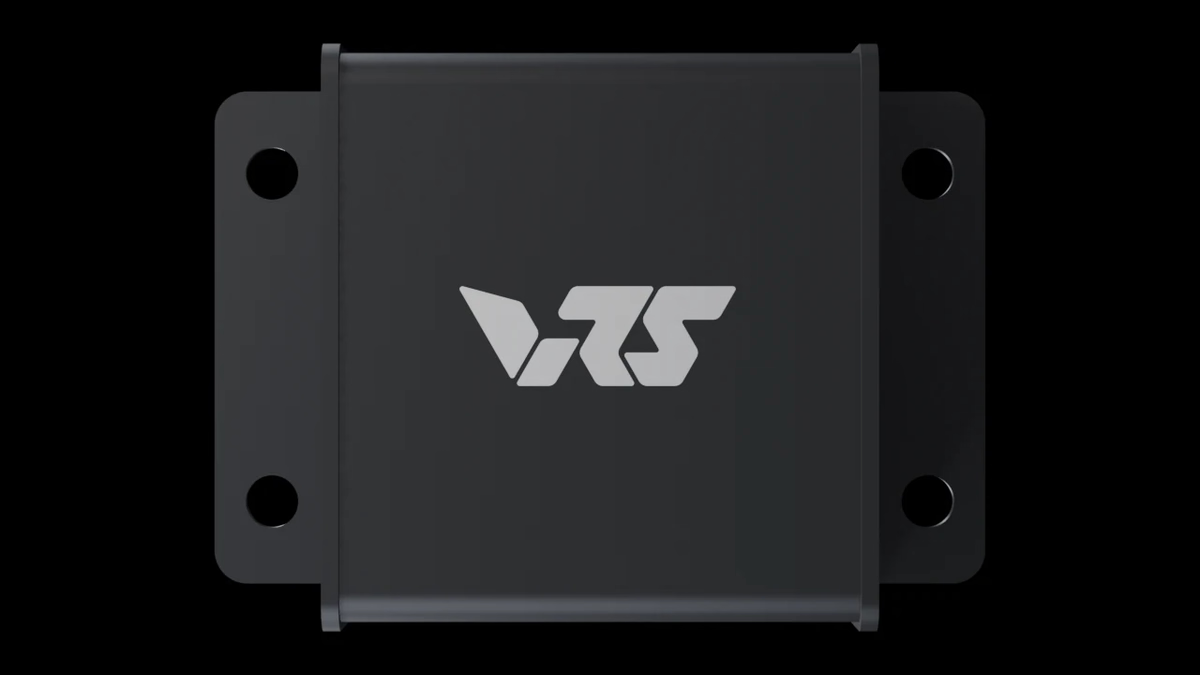
VRS Pedal controller in its aluminium enclosure

A 24-bit controller for a clean signal

All three load cells are read by a low-noise amplifier and a 24-bit converter in an aluminium enclosure. A small change in pressure reaches the sim as a small change in input. VRS One handles calibration, maximum brake force and dead zones.

VRS Pedal controller · AD7193 · 24-bit ADC, 14.3 effective bits · USB

Features

Full feature list

Brake

  • 200 kg load cell that carries the pedal arm
  • Progressive tie rod and bell crank linkage, no oil or seals
  • One-piece CNC-machined 6061 aluminium crank
  • Steel springs, no elastomers. Blue fitted, red included
  • Tool-free CNC preload knob

Throttle

  • 10 kg load cell, bolted into the arm
  • VRS-engineered throttle spring, custom-manufactured for VRS, on a polished stainless centre rod
  • Ball-bearing swing bracket
  • Tool-free CNC preload knob with a wide range

Clutch

  • 80 kg load cell
  • Race car force curve: rises, then drops at the end
  • Clevis linkage with roller
  • Rear spring pivot held on both sides, on ball bearings
  • Tool-free CNC preload knob

All pedals

  • 3 mm laser-cut steel frame, deep black powder coat
  • Shielded ball bearings on the pivots
  • Dual end stops, 70 and 90 Shore, on hex spacers
  • 5 tilt positions, about 20°
  • Pedal face height (27 mm) and tilt adjustment
  • Anodised VRS plate over the load cell
  • CNC-machined aluminium faces, sandblasted and black anodised (Sport)
  • CNC-machined faces with diamond grip on brake and clutch (Elite only)

Damper

  • Side-mounted hydraulic damper
  • Adjustable damping with a locking screw
  • Bearings pre-installed in every pedal arm
  • Factory-fitted (Elite only), optional kit on Sport

Electronics and software

  • VRS Pedal controller, all-aluminium, 3 pedal ports
  • 24-bit ADC, 14.3 effective bits
  • USB, 1.6 m cable
  • VRS One: calibration, maximum force, dead zones, firmware updates

Mounting

  • 4 × M6 per pedal, slotted, 70 × 120 mm pattern
  • Same footprint for throttle, brake and clutch
  • 87 mm wide per pedal, 92.5 mm with a damper
  • Optional G2 Baseplate

Compatibility

  • PC with a USB port, Windows 10 or above
  • Any game that supports controllers
  • The clutch uses the Pedal controller from the Throttle & Brake set
  • Accessories: G2 Damper Upgrade Kit, G2 Face Upgrade Kits, G2 Baseplate

What's included

  • Throttle & Brake: both pedals, VRS Pedal controller, mounting hardware
  • The red brake spring is provided in the box, the blue one is fitted
  • Clutch: the pedal and mounting hardware
  • Dampers fitted to the pedals (Elite only)
  • Machined pedal faces fitted (Elite only)
  • Three-year limited warranty. Made in EU.
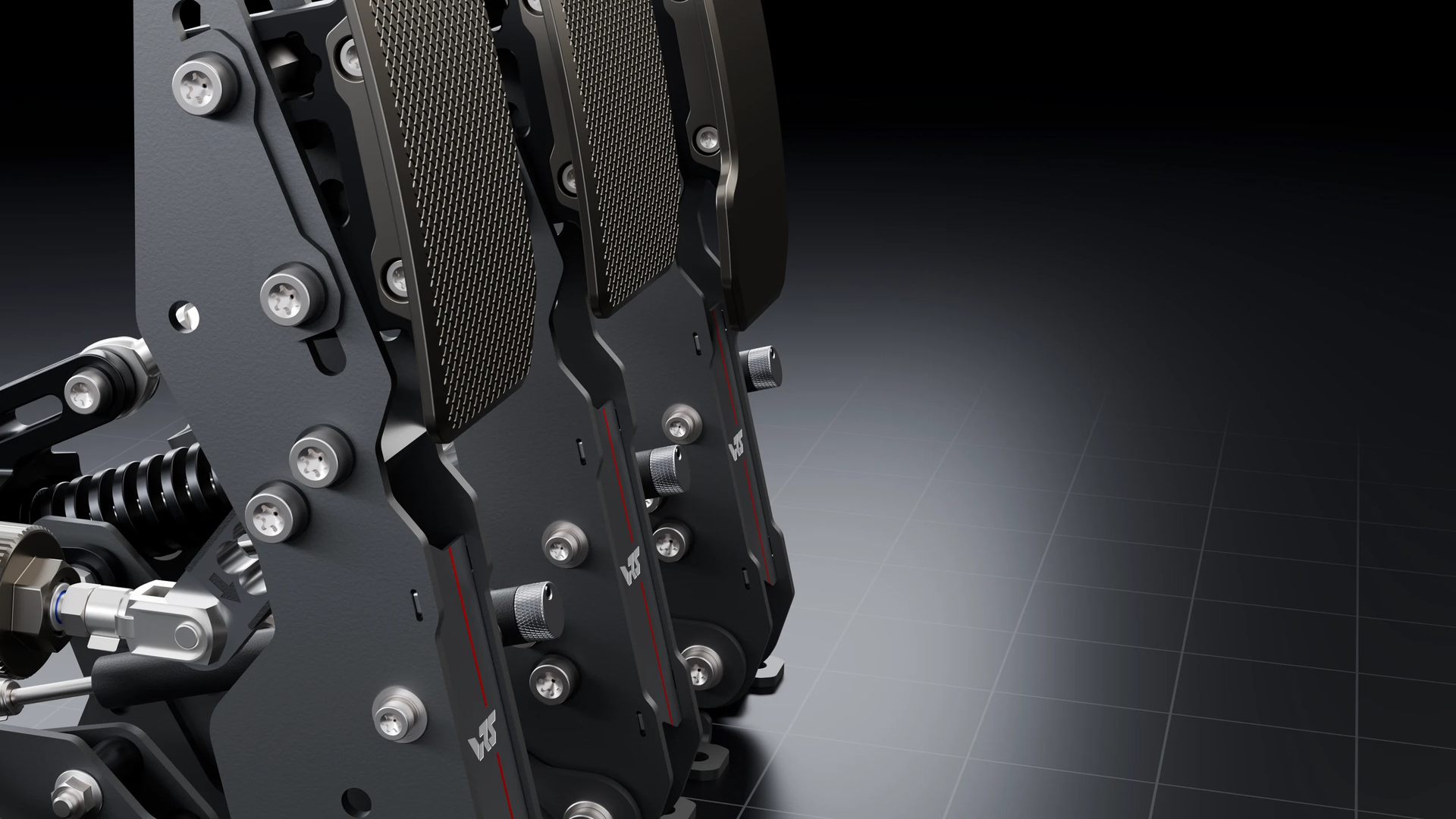
Deep black powder-coated frame of the DirectForce Pro G2 pedals
DirectForce Pro G2 Pedals

Measure the driver. Not the pedal.

DirectForce Pro G2 Pedals are available to pre-order now. Throttle & Brake and Clutch, in Sport and Elite, with a three-year limited warranty.